Source patterned indoor outdoor mdf for restaurants, offices, studios
Compare 30 listings for patterned indoor outdoor mdf panels featuring moisture-proof and acoustic properties. Buyers can review specifications, environmental standards, and customization options from suppliers in China to find suitable materials for decoration projects.
Key considerations
Products List








Comprehensive Sourcing Guide
Strategic Sourcing Guide for Patterned Indoor and Outdoor MDF Solutions
Understanding the Technical Landscape of Patterned MDF
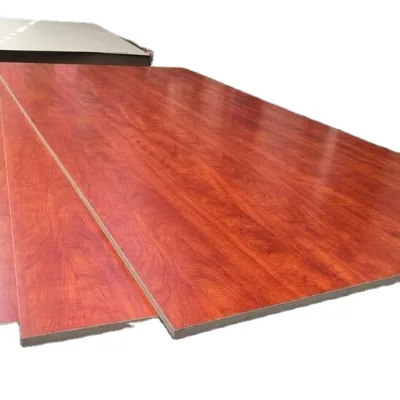
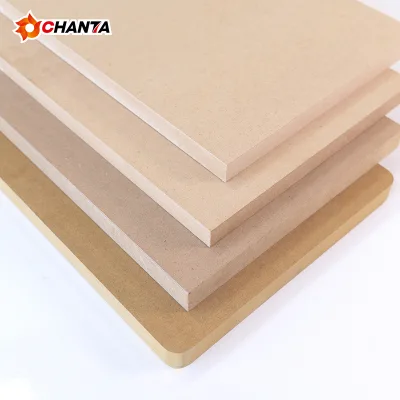
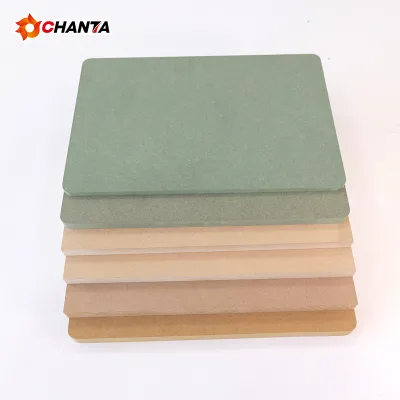
When sourcing patterned Medium Density Fiberboard (MDF), buyers must first distinguish between products designed strictly for interior environments and those engineered for more demanding conditions. The supplied data indicates a primary focus on indoor applications, with specific product attributes listing "Indoor" as the designated use case. The core material composition is consistently identified as Wood Fiber or MDF, often processed with a Melamine surface finish. This melamine layer is critical for the "Patterned" aspect of the keyword, as it allows for the application of various designs, colors, and textures while providing a durable, finished surface.
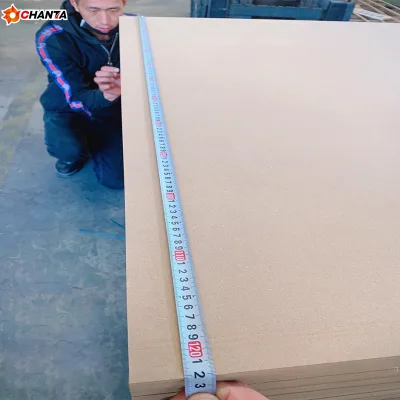
The technical specifications for these boards reveal a standard dimension of 1220mm by 2440mm, which is the industry norm for sheet goods. However, variations exist, with some listings specifying sizes such as 2440mm by 133mm, likely referring to specific acoustic panel profiles or slats rather than standard sheets. The density of the material is a key performance indicator, with observed ranges between 680 and 850 kg/m³. This density range ensures the board has sufficient structural integrity to hold patterns and withstand mechanical stress without warping. The surface finishing is described as "Finished," "Melamine," or "Black Felt," indicating that the pattern is either printed, embossed, or laminated onto the board during the manufacturing process.
For buyers specifically interested in the "outdoor" aspect of the keyword, it is essential to note that the provided high-confidence facts strictly categorize the primary use as "Indoor." While some products list "Moisture-Proof" features, which is a desirable trait for areas with high humidity, the explicit classification of "Indoor" suggests that standard patterned MDF may not be suitable for direct exterior exposure without significant protective modifications. The "Moisture-Proof" attribute should be verified against specific test data rather than assumed to equate to full weather resistance. The edge profile is typically "Square," which is standard for sheet goods, though acoustic variants may feature grooves or specific edge treatments to enhance their acoustic performance.
Compliance, Certification, and Environmental Standards
Navigating the compliance landscape for MDF procurement requires a rigorous verification of environmental and safety standards. The supplied data highlights "E0" as a recurring Environmental Standard, indicating a very low formaldehyde emission level, which is a critical requirement for indoor air quality. This E0 standard is further reinforced by the "Eco-Friendly" attribute and the mention of "E0" in the glue specifications, suggesting the use of adhesives that meet strict emission thresholds. Buyers should verify that the "E0" claim is backed by the specific test reports mentioned in the data, which include "Eco Protection" and "Flame Retardant" testing.
Fire safety is another paramount consideration, particularly for commercial applications like restaurants, recording studios, and office meeting rooms. The data lists an "EFire Rating: Class B" and a "Fireproof Grade: B2." In many international standards, Class B or B2 ratings indicate a specific level of flame spread and smoke development. However, the terminology can vary by region, and buyers must ensure that the supplier's "Class B" or "B2" designation aligns with the local building codes of the destination market. The "Test Report" section explicitly mentions "Flame Retardant" testing, which serves as the evidentiary basis for these ratings.
Regarding certifications, the data points to "CE," "ASTM," and "ISO" as available certifications. These are significant markers of quality and regulatory compliance. CE marking indicates conformity with health, safety, and environmental protection standards for products sold within the European Economic Area. ASTM standards are widely recognized in North America for material testing, while ISO certifications generally refer to quality management systems. It is important to note that while "FSC" is mentioned in the low-confidence background, it is not a high-confidence fact in the provided dataset. Therefore, buyers should not assume FSC certification is present unless explicitly confirmed by the supplier for a specific batch. The "Environmental Certification" is also listed, which should be cross-referenced with the E0 standard to ensure a comprehensive understanding of the product's environmental impact.
Cost Drivers and Economic Considerations
The economic structure of sourcing patterned MDF is influenced by several variables, including material composition, surface treatment, and order volume. The observed price range in the market data spans from 1 to 300 USD, a wide spectrum that likely reflects differences between raw sheet goods and finished, specialized acoustic panels. The "Patterned" aspect, whether achieved through embossing, printing, or lamination, adds a layer of processing cost that is not present in plain MDF. The "Surface Finishing: Finished" attribute suggests that the cost includes the labor and machinery required to apply the decorative layer, which can vary significantly based on the complexity of the design.
Minimum Order Quantity (MOQ) is a critical cost driver in this sector. The data presents a range of MOQs, from 1 unit to 5000 units, with specific high-confidence observations of 500 pieces and 100 square meters. This variability suggests that buyers can access smaller quantities for prototyping or small projects, but larger volumes are required to access the most competitive pricing tiers. The "Customization: Available" attribute implies that bespoke patterns or sizes may incur additional setup costs or higher per-unit prices, especially if the order volume falls below the standard MOQ.
Packaging and logistics also play a role in the total cost of ownership. The data lists "Standard Export Pallet Packing," "in Carton," and "Loose Packing or Pallet Packing" as options. Standard export pallet packing is generally more secure for international shipping but may add to the weight and volume of the shipment, increasing freight costs. Conversely, loose packing might reduce packaging costs but increases the risk of damage during transit. Buyers should factor in the "Place of Origin" locations, which include Hebei, Shanghai, and Shandong in China, as shipping costs will vary based on the specific port of departure and the distance to the destination.
Typical Applications and Performance Requirements
Patterned MDF is versatile, but its application is heavily dictated by its specific performance attributes. The data explicitly lists "Decoration" as a primary application, which encompasses a wide range of interior design needs. More specialized applications are highlighted by the "Acoustic Performance" attribute, which includes a Noise Reduction Coefficient (NRC) of 0.7 for certain products. These acoustic panels are specifically designed for environments where sound control is critical, such as restaurants, recording studios, office meeting rooms, home theaters, and classrooms. The "Wool Acoustic Panel Type: Groove Wooden Acoustic Panels" suggests a specific design where grooves are cut into the wood fiber to enhance sound absorption, combining aesthetic patterning with functional acoustic utility.
For general decoration, the "Design Style: Modern" and "Pattern: Custom" attributes indicate that these boards are suitable for contemporary interior design trends. The "Multi-Color" attribute allows for vibrant design schemes, while the "Moisture-Proof" feature makes them suitable for areas like kitchens or bathrooms where humidity levels are higher, provided the "Indoor" classification is respected. The "Graphic Design" project solution capability suggests that suppliers may offer services to help buyers visualize how the patterned MDF will look in their specific space, adding value to the procurement process.
It is crucial to match the product's intended use with its technical capabilities. For instance, while a product may be "Moisture-Proof," it is still classified as "Indoor" and should not be used in exterior facades or areas subject to direct rainfall. The "Fire Rating: Class B" and "Flame Retardant" test results make these materials suitable for commercial spaces where fire safety codes are stringent, but they do not render the material fireproof in the absolute sense. Buyers must ensure that the selected product meets the specific fire and acoustic requirements of the project location.
Supplier Evaluation and Geographic Considerations
Evaluating suppliers for patterned MDF requires a focus on their location, production capabilities, and service offerings. The high-confidence data identifies three primary production regions in China: Hebei, Shanghai, and Shandong. Each region may have different specializations; for example, Shanghai is a major port city, which might facilitate easier logistics for international buyers, while Hebei and Shandong are known for their manufacturing bases. The "Place of Origin" is a critical factor in determining the lead time and shipping costs.
Supplier capabilities should be assessed based on the "Project Solution Capability: Graphic Design" and "After-Sale Service: Online Technical Support." These attributes indicate that suppliers are not just manufacturers but also partners who can assist with design integration and provide support after the sale. The availability of "Customization" is another key differentiator, allowing buyers to tailor the product to their specific needs. However, buyers must verify that the customization options align with the MOQ requirements, as custom orders often have higher minimum thresholds.
When evaluating suppliers, buyers should request documentation for the "Test Report" covering "Eco Protection," "Sound Absorption," and "Flame Retardant" properties. The presence of "CE," "ASTM," and "ISO" certifications should be verified through valid certificates rather than relying on supplier claims alone. The "Glue" specification, which includes options like "MR/E0/E1/E2," is another area where supplier transparency is vital. Buyers should confirm which glue type is used in the specific product they are purchasing, as this directly impacts the environmental rating and safety of the final product.
Quality Control and Long-Term Procurement Strategy
Maintaining quality in patterned MDF procurement requires a robust quality control (QC) strategy. The "Surface Finishing: Finished" and "Process: Embossed" attributes suggest that visual inspection is a primary QC method. Buyers should establish clear acceptance criteria for the pattern consistency, color accuracy, and surface texture. The "Density: 680-850" range provides a quantitative benchmark for QC, ensuring that the board meets the structural requirements for its intended application. Any deviation from this density range could indicate issues with the manufacturing process or material composition.
Long-term procurement considerations involve building a relationship with suppliers who can consistently deliver high-quality products. The "After-Sale Service: Online Technical Support" indicates that suppliers should be responsive to any issues that arise post-delivery. Buyers should also consider the "Standard Export Pallet Packing" and "in Carton" options to ensure that the product arrives in good condition. For large-scale projects, the "MOQ: 500PCS" or "100sqm" requirements may necessitate a phased procurement strategy to manage inventory and cash flow effectively.
Finally, buyers should remain vigilant about the "Environmental Standard: E0" and "Fire Rating: Class B" claims. These are not static attributes but depend on the specific batch of production. Regular audits or third-party testing may be necessary to ensure that the products continue to meet the required standards over time. By focusing on these technical and procedural aspects, buyers can secure a reliable supply of patterned MDF that meets their design, safety, and performance needs.
Comparative Analysis of Product Attributes
To facilitate decision-making, the following table summarizes the key attributes observed in the supplied data, highlighting the variations and commonalities across different product listings.
| Attribute Category | Specific Attribute | Observed Values / Options | Relevance to Procurement |
|---|---|---|---|
| Material | Base Material | Wood Fiber, MDF | Determines structural integrity and workability. |
| Surface | Surface Finishing | Finished, Melamine, Embossed | Affects aesthetics and durability; Melamine offers pattern options. |
| Performance | Acoustic Performance | NRC 0.7 (for specific panels) | Critical for studios, classrooms, and meeting rooms. |
| Safety | Fire Rating | Class B, B2 | Essential for commercial and public building compliance. |
| Environment | Environmental Standard | E0 | Indicates low formaldehyde emissions; crucial for indoor air quality. |
| Dimensions | Standard Size | 1220mm x 2440mm | Standard sheet size; affects cutting efficiency and waste. |
| Customization | Pattern | Custom, Multi-Color | Allows for unique design integration; may impact MOQ. |
| Origin | Place of Origin | Hebei, Shanghai, Shandong | Influences logistics, lead time, and shipping costs. |
| MOQ | Minimum Order | 1, 100sqm, 500PCS | Determines feasibility for small vs. large projects. |
This comparison underscores the importance of aligning specific project requirements with the available product attributes. Buyers should prioritize the attributes that are non-negotiable for their specific application, such as the NRC rating for acoustic panels or the E0 standard for health-conscious environments, while remaining flexible on secondary attributes like packaging or specific origin regions.
FAQs
What is the standard size for patterned indoor MDF sheets?
The standard size for patterned indoor MDF sheets is 1220mm by 2440mm. Some acoustic panel variants may have different dimensions like 2440mm by 133mm, so buyers should verify the specific model number before ordering to ensure compatibility with their project requirements.
Can patterned MDF be used in moisture-prone indoor areas?
Yes, patterned MDF can be used in moisture-prone indoor areas because it features a moisture-proof attribute. However, the product is strictly classified for indoor use only, so it should not be exposed to direct exterior weather or rainfall despite its water-resistant properties.
Which environmental standard does the patterned MDF meet?
The patterned MDF meets the E0 environmental standard, indicating very low formaldehyde emissions. This eco-friendly rating is supported by test reports for eco-protection and is achieved through the use of specific glue types like MR, E0, E1, or E2 in the manufacturing process.
What fire rating is required for commercial patterned MDF?
Commercial patterned MDF typically carries a Class B fire rating or B2 fireproof grade. This classification is backed by flame retardant test reports, making the material suitable for environments like restaurants and offices where fire safety codes are stringent.
How does the NRC value affect acoustic panel performance?
An NRC value of 0.7 indicates strong sound absorption capabilities for acoustic panels. This performance level makes the product ideal for noise-sensitive spaces such as recording studios, home theaters, and classrooms where controlling reverberation is critical for audio clarity.
What is the minimum order quantity for patterned MDF?
The minimum order quantity varies, with common thresholds of 500 pieces or 100 square meters. Buyers should check specific supplier listings as MOQs can range from 1 unit to 5000 units depending on whether the order is for standard sheets or customized acoustic panels.
Which certifications are available for patterned MDF products?
Available certifications include CE, ASTM, and ISO, which verify compliance with international safety and quality standards. While FSC is mentioned in background data, buyers should rely on the high-confidence CE, ASTM, and ISO certifications provided in the product specifications.